Buy kompendium.eu ?
We are moving the project
kompendium.eu .
Are you interested in purchasing the domain
kompendium.eu ?
domain@kv-gmbh.de · 0541-91531010
Buy kompendium.eu ?
What is the braking distance, stopping distance, and reaction distance?
The braking distance is the distance a vehicle travels from the moment the brakes are applied until the vehicle comes to a complete stop. It is influenced by factors such as the speed of the vehicle, the condition of the road, and the condition of the vehicle's brakes. The stopping distance is the total distance a vehicle travels from the moment the driver perceives a hazard and applies the brakes until the vehicle comes to a complete stop. It is the sum of the reaction distance and the braking distance. The reaction distance is the distance a vehicle travels from the moment the driver perceives a hazard until the driver physically reacts by applying the brakes. It is influenced by factors such as the driver's reaction time and the speed of the vehicle. **
Long-distance or close-distance relationship?
The choice between a long-distance or close-distance relationship ultimately depends on the individuals involved and their unique circumstances. Long-distance relationships can be challenging due to the physical distance, but they can also be strengthened by strong communication and trust. Close-distance relationships offer the benefit of regular physical interaction, but they also require effort to maintain a healthy balance of independence and togetherness. Ultimately, the success of a relationship depends on the commitment and effort put in by both partners, regardless of the distance. **

Similar search terms for Distance
Top-Angebote
Products related to Distance:
-
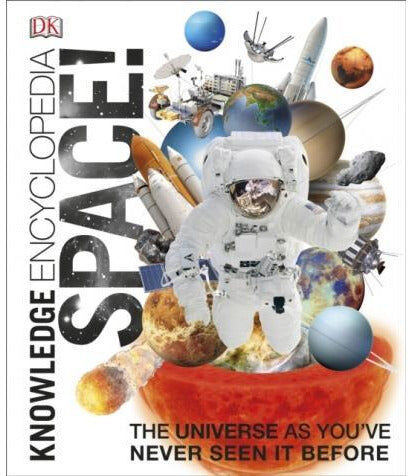
Dorling Kindersley DK Knowledge Encyclopedia Space The Ultimate Space & Astronomy Reference Guide for Kids and Families - Planets, Stars, Galaxies & the Universe ExplainExplore the wonders of the universe with the DK Knowledge Encyclopedia Space, an inspiring and visually stunning guide to outer space.Packed with high-definition photographs, 3D illustrations, infographics, facts, timelines, and scientific explanations, this encyclopedia takes readers on an unforgettable journey from Earth to the farthest reaches of the cosmos. Perfect for curious readers, young astronomers, and space enthusiasts, this book explains: The solar system, planets, moons, and dwarf planets Stars, nebulas, black holes, galaxies & cosmic phenomena Space exploration, astronauts & spacecraft The Big Bang, universe evolution & future missions The latest science discoveries explained in kid-friendly language A brilliant educational book for STEM learners, classrooms, home libraries, and children aged 8–14 who love space.9,99 £*Shipping: 2,99 £Secure redirect to the provider
-
Arcturus Children's Encyclopedia of Space by Giles Sparrow Visual Guide to the Universe, Planets, Stars & Solar System Astronomy Reference Book for KidsJourney beyond Earth and discover the wonders of the cosmos with Children's Encyclopedia of Space: A Visual Guide to the Universe by Giles Sparrow. Part of the Arcturus Children's Reference Library, this engaging visual encyclopedia introduces young readers to the fascinating world of space, astronomy and the universe. Explore the Solar System, planets, moons, stars, galaxies and other extraordinary objects in space while developing an understanding of the vast universe beyond our planet. Presented as an accessible visual reference guide, the book makes complex astronomical topics engaging and easier for young readers to explore. Ideal for children fascinated by planets, stars, space exploration and astronomy, this encyclopedia encourages curiosity and provides a useful resource for independent reading, homework, school projects and general knowledge. Whether learning about our neighbouring planets or exploring the mysteries of distant stars and galaxies, Children's Encyclopedia of Space is a valuable addition to any young space enthusiast's bookshelf. Key Features Engaging children's space encyclopedia Written by astronomy author Giles Sparrow A visual guide to the universe and outer space Explores planets, stars, moons, galaxies and the Solar System Introduces astronomy in an accessible format for young readers Ideal for school projects, homework and independent learning Part of the Arcturus Children's Reference Library Excellent educational gift for young space and science enthusiasts5,99 £*Shipping: 2,99 £Secure redirect to the provider
-
Inspired Deals Smart Laser Measure 40m Bluetooth Laser Distance Meter Smart Laser Measure 40m Bluetooth Laser Distance MeterMeasure rooms, furniture, and project spaces with confidence using this compact laser rangefinder built for fast, reliable results. With a 0.0540m measuring range and precision up to 3mm, it helps homeowners, renovators, designers, and professionals...71,97 $*Shipping: 0,00 $Secure redirect to the provider
-
Brotherwise Games - Stormlight Guide - Board Game - Roshal Guide - Visual ReferenceWelcome to Roshal is a visual guide to the extraordinary setting of Brandon Sanderson’s Stormlight Archive. This guide offers an accessible overview of the world, its landscapes, wildlife, cultures, and magical forces without revealing major story developments. It provides atmospheric reference material for readers, roleplayers, and fans who want to understand Roshar beyond the main narrative. Inside, you'll find an illustrated introduction to Roshar's world and environment, information about its flora and fauna, insights into the cultures and magic of the setting, and a spoiler-conscious format suitable for exploring the setting. This guide is designed to be enjoyed alongside the novels or as an introduction to the setting of the Cosmere Roleplaying Game, and it provides a starting point for further exploration of the Stormlight setting and its wider Cosmere connections.9,53 £*Shipping: 3,95 £Secure redirect to the provider


-
Which distance?
The distance between two points is the length of the straight line segment connecting them. It can be measured in various units such as meters, kilometers, or miles. Distance is a fundamental concept in geometry and is used to quantify the separation between objects or locations. **
-
How can I best remember the braking distance, stopping distance, and reaction distance?
To remember the braking distance, stopping distance, and reaction distance, you can use the acronym "BSDR." Braking distance is the distance it takes for your vehicle to stop once the brakes are applied, stopping distance is the total distance it takes for your vehicle to come to a complete stop including reaction time and braking distance, and reaction distance is the distance your vehicle travels during the time it takes for you to perceive a hazard and apply the brakes. You can also remember these distances by practicing safe driving habits, such as maintaining a safe following distance, staying alert and focused while driving, and being aware of road conditions and speed limits. **
-
Should a long-distance bus be equipped with semi-automatic or manual transmission?
A long-distance bus should be equipped with a semi-automatic transmission. Semi-automatic transmissions offer the convenience of automatic shifting while still allowing the driver to have some control over gear selection, which can be beneficial in certain driving conditions. This can help improve fuel efficiency and overall performance, making it a more suitable option for long-distance travel where efficiency and driver comfort are important factors. **
-
How do you calculate the braking distance, reaction distance, and stopping distance in driving school?
In driving school, braking distance is calculated by determining the distance a vehicle travels from the moment the brakes are applied until the vehicle comes to a complete stop. Reaction distance is calculated by measuring the distance a vehicle travels from the moment a driver perceives a hazard until they begin to apply the brakes. Stopping distance is the sum of braking distance and reaction distance, representing the total distance a vehicle travels from perceiving a hazard to coming to a complete stop. These calculations are essential for understanding safe driving practices and ensuring drivers maintain a safe distance from other vehicles on the road. **

How far is the distance in a long-distance relationship?
The distance in a long-distance relationship can vary greatly depending on the individuals involved. It can range from a few hours' drive to different cities or states, to across countries or even continents. The distance can make it challenging to see each other regularly, but with communication and effort, many couples are able to make it work. Ultimately, the emotional connection and commitment between partners are what can help bridge the physical distance in a long-distance relationship. **
What is the difference between braking distance and stopping distance?
Braking distance is the distance a vehicle travels from the moment the brakes are applied until the vehicle comes to a complete stop. It includes the distance covered during the driver's reaction time and the actual braking process. Stopping distance, on the other hand, is the total distance a vehicle travels from the moment the driver perceives a hazard until the vehicle comes to a complete stop. It includes both the braking distance and the distance covered during the driver's reaction time. **
Top-Angebote
Products related to Distance:
-
Arcturus Children's Encyclopedia of Animals by Michael Leach Visual Guide to the Animal Kingdom Wildlife & Nature Reference Book for KidsExplore the incredible diversity of the natural world with Children's Encyclopedia of Animals: A Visual Guide to the Animal Kingdom by Michael Leach. Designed as an engaging reference book for young animal enthusiasts, this visual encyclopedia introduces children to the fascinating creatures that share our planet. Readers can discover animals from across the natural world, learning about different species, their characteristics, behaviours, habitats and remarkable adaptations. The accessible reference format makes it easy for children to explore topics that interest them while developing their knowledge of animals, wildlife, habitats and nature. With an emphasis on visual learning, this animal encyclopedia is a useful addition to a child's home reference library. It's ideal for curious young readers who love everything from mammals and birds to reptiles, amphibians, fish and other amazing creatures. Perfect for independent reading, school projects, homework and general knowledge, Children's Encyclopedia of Animals combines learning and discovery in an accessible guide to the animal kingdom. Key Features Comprehensive children's animal encyclopedia Visual guide to the fascinating animal kingdom Written by Michael Leach Introduces children to animals and wildlife from around the world Covers animal characteristics, habitats and behaviour Encourages curiosity about wildlife and the natural world Useful reference resource for school projects and homework Great educational gift for young animal lovers5,99 £*Shipping: 2,99 £Secure redirect to the provider
-
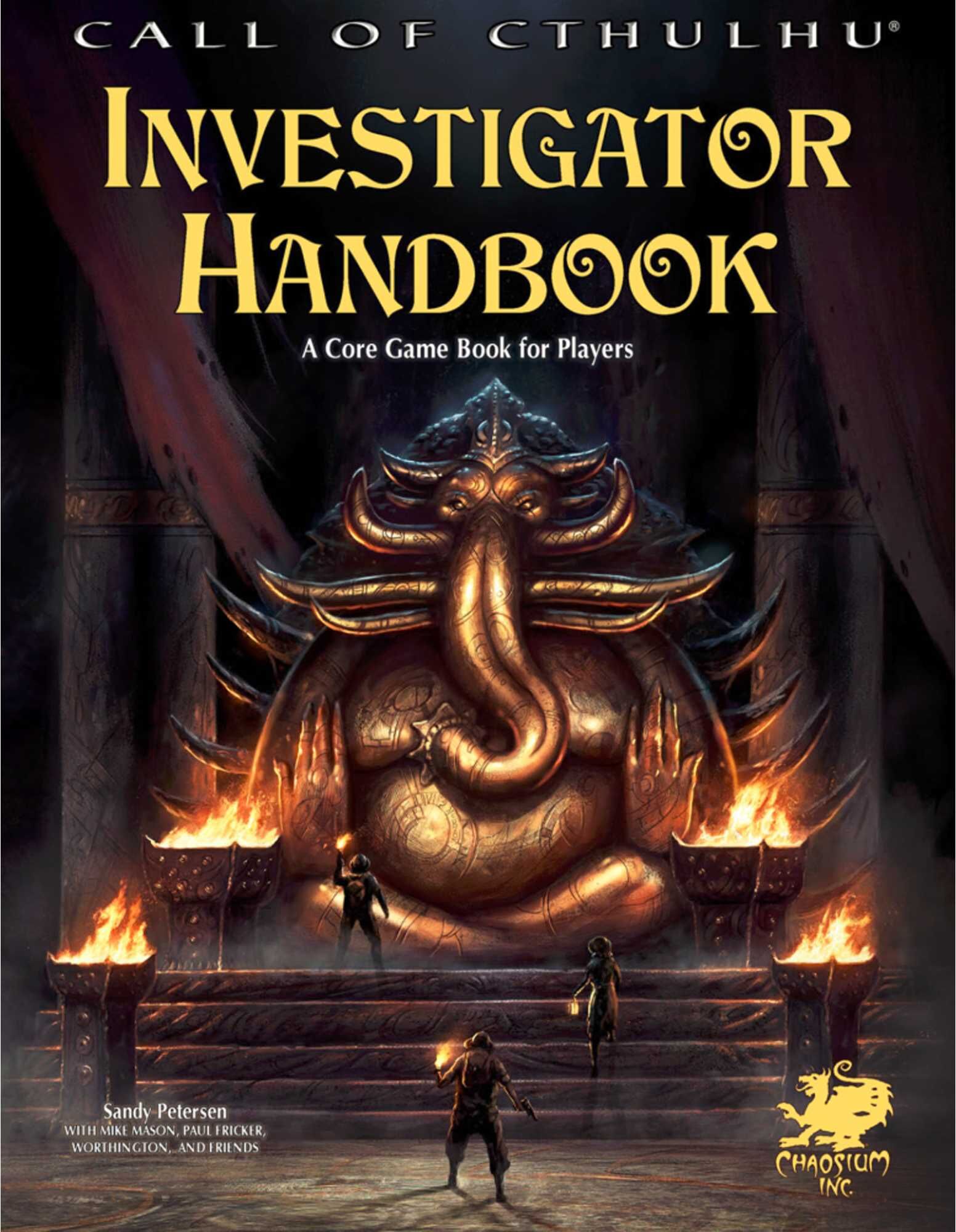
Chaosium Call of Cthulhu 7th Edition Investigator’s Handbook - Tabletop RPG ReferenceExpand your investigations in the Call of Cthulhu role-playing game with this player-focused handbook from Chaosium. It includes over 100 occupations and expanded skill descriptions to help develop characters and conduct investigations.36,49 £*Shipping: 3,95 £Secure redirect to the provider
-
Dorling Kindersley DK Knowledge Encyclopedia Space The Ultimate Space & Astronomy Reference Guide for Kids and Families - Planets, Stars, Galaxies & the Universe ExplainExplore the wonders of the universe with the DK Knowledge Encyclopedia Space, an inspiring and visually stunning guide to outer space.Packed with high-definition photographs, 3D illustrations, infographics, facts, timelines, and scientific explanations, this encyclopedia takes readers on an unforgettable journey from Earth to the farthest reaches of the cosmos. Perfect for curious readers, young astronomers, and space enthusiasts, this book explains: The solar system, planets, moons, and dwarf planets Stars, nebulas, black holes, galaxies & cosmic phenomena Space exploration, astronauts & spacecraft The Big Bang, universe evolution & future missions The latest science discoveries explained in kid-friendly language A brilliant educational book for STEM learners, classrooms, home libraries, and children aged 8–14 who love space.9,99 £*Shipping: 2,99 £Secure redirect to the provider
-
Arcturus Children's Encyclopedia of Space by Giles Sparrow Visual Guide to the Universe, Planets, Stars & Solar System Astronomy Reference Book for KidsJourney beyond Earth and discover the wonders of the cosmos with Children's Encyclopedia of Space: A Visual Guide to the Universe by Giles Sparrow. Part of the Arcturus Children's Reference Library, this engaging visual encyclopedia introduces young readers to the fascinating world of space, astronomy and the universe. Explore the Solar System, planets, moons, stars, galaxies and other extraordinary objects in space while developing an understanding of the vast universe beyond our planet. Presented as an accessible visual reference guide, the book makes complex astronomical topics engaging and easier for young readers to explore. Ideal for children fascinated by planets, stars, space exploration and astronomy, this encyclopedia encourages curiosity and provides a useful resource for independent reading, homework, school projects and general knowledge. Whether learning about our neighbouring planets or exploring the mysteries of distant stars and galaxies, Children's Encyclopedia of Space is a valuable addition to any young space enthusiast's bookshelf. Key Features Engaging children's space encyclopedia Written by astronomy author Giles Sparrow A visual guide to the universe and outer space Explores planets, stars, moons, galaxies and the Solar System Introduces astronomy in an accessible format for young readers Ideal for school projects, homework and independent learning Part of the Arcturus Children's Reference Library Excellent educational gift for young space and science enthusiasts5,99 £*Shipping: 2,99 £Secure redirect to the provider
-
What is the braking distance, stopping distance, and reaction distance?
The braking distance is the distance a vehicle travels from the moment the brakes are applied until the vehicle comes to a complete stop. It is influenced by factors such as the speed of the vehicle, the condition of the road, and the condition of the vehicle's brakes. The stopping distance is the total distance a vehicle travels from the moment the driver perceives a hazard and applies the brakes until the vehicle comes to a complete stop. It is the sum of the reaction distance and the braking distance. The reaction distance is the distance a vehicle travels from the moment the driver perceives a hazard until the driver physically reacts by applying the brakes. It is influenced by factors such as the driver's reaction time and the speed of the vehicle. **
-
Long-distance or close-distance relationship?
The choice between a long-distance or close-distance relationship ultimately depends on the individuals involved and their unique circumstances. Long-distance relationships can be challenging due to the physical distance, but they can also be strengthened by strong communication and trust. Close-distance relationships offer the benefit of regular physical interaction, but they also require effort to maintain a healthy balance of independence and togetherness. Ultimately, the success of a relationship depends on the commitment and effort put in by both partners, regardless of the distance. **
-
Which distance?
The distance between two points is the length of the straight line segment connecting them. It can be measured in various units such as meters, kilometers, or miles. Distance is a fundamental concept in geometry and is used to quantify the separation between objects or locations. **
-
How can I best remember the braking distance, stopping distance, and reaction distance?
To remember the braking distance, stopping distance, and reaction distance, you can use the acronym "BSDR." Braking distance is the distance it takes for your vehicle to stop once the brakes are applied, stopping distance is the total distance it takes for your vehicle to come to a complete stop including reaction time and braking distance, and reaction distance is the distance your vehicle travels during the time it takes for you to perceive a hazard and apply the brakes. You can also remember these distances by practicing safe driving habits, such as maintaining a safe following distance, staying alert and focused while driving, and being aware of road conditions and speed limits. **
Similar search terms for Distance
-
Inspired Deals Smart Laser Measure 40m Bluetooth Laser Distance Meter Smart Laser Measure 40m Bluetooth Laser Distance MeterMeasure rooms, furniture, and project spaces with confidence using this compact laser rangefinder built for fast, reliable results. With a 0.0540m measuring range and precision up to 3mm, it helps homeowners, renovators, designers, and professionals...71,97 $*Shipping: 0,00 $Secure redirect to the provider
-
Brotherwise Games - Stormlight Guide - Board Game - Roshal Guide - Visual ReferenceWelcome to Roshal is a visual guide to the extraordinary setting of Brandon Sanderson’s Stormlight Archive. This guide offers an accessible overview of the world, its landscapes, wildlife, cultures, and magical forces without revealing major story developments. It provides atmospheric reference material for readers, roleplayers, and fans who want to understand Roshar beyond the main narrative. Inside, you'll find an illustrated introduction to Roshar's world and environment, information about its flora and fauna, insights into the cultures and magic of the setting, and a spoiler-conscious format suitable for exploring the setting. This guide is designed to be enjoyed alongside the novels or as an introduction to the setting of the Cosmere Roleplaying Game, and it provides a starting point for further exploration of the Stormlight setting and its wider Cosmere connections.9,53 £*Shipping: 3,95 £Secure redirect to the provider
-
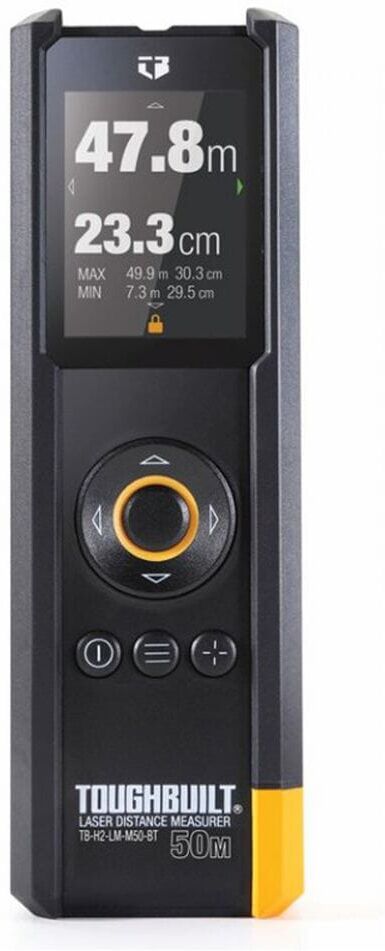
TOUGHBUILT 50M Laser Distance Measurer with Digital ViewfinderTOUGHBUILT 50M Laser Distance Measurer with Digital Viewfinder (TB-H2-LM-M50-BT) A laser dot that vanishes in bright daylight or at long range makes a laser measurer hard to use outdoors. The ToughBuilt 50m Laser Distance Measurer solves that with a digital viewfinder and adjustable zoom (up to 4x), so you can see exactly where the red laser point lands on a distant target, indoors or out. It measures up to 50m (165ft), and the large colour screen shows the reading clearly. A built-in inclinometer allows calculated measurements and functions beyond a simple distance reading. Bluetooth connects the measurer to the ToughBuilt Connect app on iOS and Android, so measurements can be stored, annotated with photos and notes, and shared as reports instead of being copied down by hand. Key Features & Benefits138,00 £*Shipping: 0,00 £Secure redirect to the provider
-
Inspire Curations MeasurePro JG5 Infrared Distance Meter Portable Digital Laser Measuring Tool MeasurePro JG5 Infrared Distance Meter Portable Digital Laser Measuring ToolMeasure with confidence, speed, and precisionwithout the hassle of tapes or guesswork. This infrared distance meter is built for professionals and DIY users who need fast, accurate measurements in any environment. Compact and easy to carry, it...48,97 $*Shipping: 0,00 $Secure redirect to the provider
-
Should a long-distance bus be equipped with semi-automatic or manual transmission?
A long-distance bus should be equipped with a semi-automatic transmission. Semi-automatic transmissions offer the convenience of automatic shifting while still allowing the driver to have some control over gear selection, which can be beneficial in certain driving conditions. This can help improve fuel efficiency and overall performance, making it a more suitable option for long-distance travel where efficiency and driver comfort are important factors. **
-
How do you calculate the braking distance, reaction distance, and stopping distance in driving school?
In driving school, braking distance is calculated by determining the distance a vehicle travels from the moment the brakes are applied until the vehicle comes to a complete stop. Reaction distance is calculated by measuring the distance a vehicle travels from the moment a driver perceives a hazard until they begin to apply the brakes. Stopping distance is the sum of braking distance and reaction distance, representing the total distance a vehicle travels from perceiving a hazard to coming to a complete stop. These calculations are essential for understanding safe driving practices and ensuring drivers maintain a safe distance from other vehicles on the road. **
-
How far is the distance in a long-distance relationship?
The distance in a long-distance relationship can vary greatly depending on the individuals involved. It can range from a few hours' drive to different cities or states, to across countries or even continents. The distance can make it challenging to see each other regularly, but with communication and effort, many couples are able to make it work. Ultimately, the emotional connection and commitment between partners are what can help bridge the physical distance in a long-distance relationship. **
-
What is the difference between braking distance and stopping distance?
Braking distance is the distance a vehicle travels from the moment the brakes are applied until the vehicle comes to a complete stop. It includes the distance covered during the driver's reaction time and the actual braking process. Stopping distance, on the other hand, is the total distance a vehicle travels from the moment the driver perceives a hazard until the vehicle comes to a complete stop. It includes both the braking distance and the distance covered during the driver's reaction time. **
* All prices are inclusive of VAT and, if applicable, plus shipping costs. The offer information is based on the details provided by the respective shop and is updated through automated processes. Real-time updates do not occur, so deviations can occur in individual cases. ** Note: Parts of this content were created by AI.